
Quick answer
Yes, AI headshots are allowed on LinkedIn, Instagram, dating apps, resumes, and company sites, as long as the photo still looks like you. Every major platform cares about honest likeness, not whether a camera or an algorithm made the image. The one hard no is government ID: passports and visas reject AI altered photos everywhere. Starting August 2, 2026, the EU also requires AI images of real people to be clearly disclosed.
Are AI Headshots Allowed? The Complete 2026 Platform Policy Guide
Good news first. Nobody is going to kick down your door for using an AI headshot on LinkedIn. Bad news, sort of. Try the same photo on a passport and you will meet a very unamused government employee, plus a delay you did not budget for.
So "are AI headshots allowed" does not have one answer. It has about a dozen, and they depend entirely on where you plan to use the picture. A polished AI headshot on your company team page is completely normal in 2026. That same image on a federal ID is fraud. Dating apps sit somewhere in the middle and mostly just want you to stop pretending you have abs you do not have.
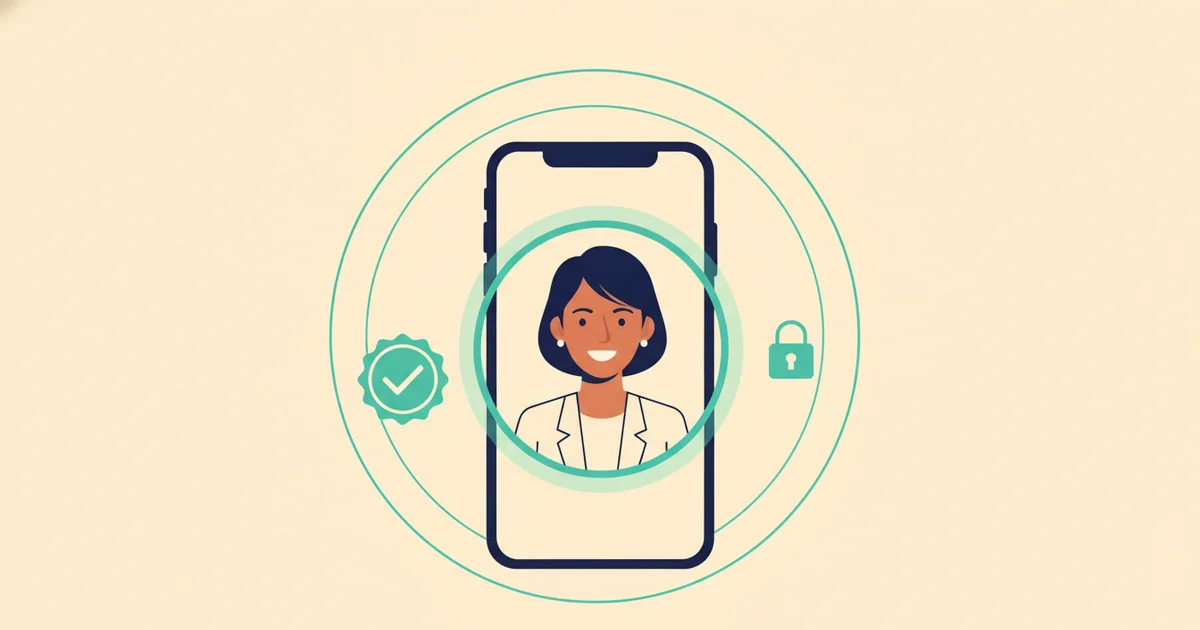
We read the actual policies so you do not have to. The terms of service, the government photo rules, the platform help pages, and the new EU law that lands in August 2026. Below is the whole map, platform by platform, with what is allowed, what is banned, and when you should just admit the robot helped.
The one rule that runs almost everything
Before the table, here is the principle that explains 90 percent of it. Almost no platform bans AI photos because they were made by AI. They ban images that lie about who you are.
LinkedIn, Tinder, Bumble, Hinge, Instagram, your future employer, a real estate board. They all use slightly different words, but the rule underneath is the same: the photo has to be an honest likeness of the actual you. Generate a sharper, better lit, better dressed version of your real face and you are fine almost everywhere. Generate a younger, slimmer, differently shaped stranger and you are in trouble almost everywhere.
The single big exception is government identity documents. Passports, visas, and national IDs do not care about "honest likeness." They want an unedited photograph of your physical face, full stop, and they are getting very good at spotting anything else.
Quick reference: where AI headshots stand in 2026
| Where you want to use it | Allowed? | Do you have to disclose it? | The risk if you push it | Smart move |
|---|---|---|---|---|
| Yes, if it reflects your likeness | No (disclosure only suggested for AI heavy posts) | A small Content Credentials badge may appear on the image | Keep it recognizably you | |
| Tinder | Yes, if it matches your real face | No | Face Check video verification can flag an idealized face | Mix in real photos |
| Hinge | Yes, if it is accurate and not a fake identity | No | Optional selfie verification checks your face geometry | Keep face, age, and body honest |
| Bumble | Only if it is not used to deceive | No | Photo verification is required for US users | Use the fewest AI shots, trained on your own face |
| Resume or job application | Yes, no law bans it | Recruiters strongly prefer you do | Looking obviously AI can read as a red flag | Use an honest likeness, be ready to explain |
| Company website or staff ID | Usually, but check internal policy | Per employer | Some firms ban AI on company assets | Ask before you upload |
| Instagram and Facebook | Yes | Meta may auto label it | An "AI info" tag can appear automatically | Fine, just expect a label |
| Passport, visa, or national ID | No, banned if it alters your face | Not applicable, it gets rejected | Rejection, delays, and fraud exposure | Use a real, unedited photo |
| Acting and casting profiles | Allowed but discouraged | Norm: must match how you look now | Casting expects real, current headshots | Book a real photographer |
| Real estate profiles | Only if it presents a true picture | Per the agent code of ethics | Truth in advertising rules apply | Keep it accurate and current |
| Anywhere in the EU (image of a real person) | Yes, but regulated from Aug 2, 2026 | Yes, deepfakes must be disclosed | The new AI Act transparency rules | Disclose plus add Content Credentials |
Last updated: June 2026. Policies in this space move fast, so we re-check this table every quarter.
Are AI headshots allowed on LinkedIn?
Yes. LinkedIn permits AI tools to create or enhance your profile photo. A LinkedIn spokesperson told CNBC the only real condition is that "the photo must reflect your likeness." The platform genuinely does not care whether a camera or a model produced the pixels.
There are two things worth knowing so you do not get surprised.
First, the User Agreement already says your profile image has to be you. The rules prohibit using "an image that is not your likeness or a head-shot photo for your profile." So a generic AI face that looks nothing like you was never allowed, AI or not.
Second, you do not have to disclose that your headshot is AI. LinkedIn only suggests, as a best practice, that you mention heavy AI use when you create posts and content. That guidance is about the stuff you publish in the feed, not your profile picture, and it is a recommendation, not a rule.
Myth check: "LinkedIn secretly throttles AI headshots by 40 to 60 percent." This one gets repeated everywhere and it is not a real LinkedIn policy. There is no published figure, and crucially, a profile photo does not have "reach" to throttle in the first place. What is real: LinkedIn has been deprioritizing low effort AI written posts in the feed, the so called "AI slop." That is about your writing, not your face. Your headshot is safe.
You may also start seeing a tiny "CR" badge on some images in the feed. That is Content Credentials, the C2PA provenance standard, quietly noting that a picture carries AI metadata. It is a label, not a punishment. Want the deeper version? Our LinkedIn profile photo guide covers sizing, expression, and what recruiters actually look at.
Can you use AI photos on Tinder, Hinge, and Bumble?
Short version: all three allow AI assisted photos, none of them allow you to catfish. The line is honesty, and in 2026 they have real technology enforcing it.
Tinder. Its terms now fold AI generated images into "Your Content," which means you are responsible for their accuracy. More importantly, Tinder rolled out Face Check, a quick video selfie that maps your facial geometry and confirms your profile photos are actually you. An AI photo that idealizes your face into someone else will fail that check. Tinder also has an AI Photo Selector, but note what it does: it picks the best real photos from your camera roll. It does not invent a face.
Hinge. Its community guidelines prohibit "fake identities or AI-generated content to mislead others," and its AI principles say generated images should not misrepresent you or your intentions. Hinge offers selfie verification that checks your face geometry, so consistency between your real face and your photos matters.
Bumble. This is the strictest and the clearest. Bumble's guidelines explicitly tell you not to use "someone else's photos, artificially-generated photos, or enhanced photos to deceive others." Photo verification is mandatory for US users. AI assisted shots trained on your own face, mixed with real ones, are fine. A fabricated face is not.
You will see dating coaches push a "70 percent AI, 30 percent real" blend, or a 60/40 mix. That is their advice for looking authentic, not a platform rule. Treat it as a styling tip, not policy. And remember Match Group is expanding Face Check across its apps through 2026, so the runway for fully fake faces is closing.
Can I put an AI headshot on my resume or use it at work?
Legally, yes. No US or EU law makes it illegal to use an AI headshot on a resume or a LinkedIn profile. Most of the legal weight in hiring actually sits on the employer side, not yours: rules like the EEOC and Title VII (photos can introduce bias), New York City's Local Law 144 (automated hiring tools need bias audits), and Illinois BIPA (consent for face data) all govern how companies handle your image, not how you made it.
The social rules are trickier than the legal ones. A widely cited 2025 recruiter survey found a funny tension: about 76 percent of recruiters preferred an AI headshot in a blind test, but roughly 66 percent felt put off once they realized it was AI, and close to 9 in 10 said candidates should disclose it. So the photo wins until the moment it gets caught, then trust drops.
Practical takeaway. If you use one, use a version that obviously looks like you, skip the plastic skin, and be ready to say "yeah, I cleaned up a real photo with AI" without flinching. In the US and UK, by the way, most resumes should not carry a photo at all. We get into that in should you put a photo on your US resume and can recruiters tell if your headshot is AI.
Can I use an AI headshot for a passport or government ID?
No. This is the one place where the answer is a flat, boring, non negotiable no, and it is the same story in every country we checked.
The US State Department could not be clearer. Its guidance says: "Do not change your photo using computer software, phone apps or filters, or artificial intelligence." Beauty filters, skin smoothing, AI enhancement, face swaps, all rejected. Submit an edited photo and best case you get a delay, worst case you are looking at a false statement on a passport application, which is a real legal problem, not a slap on the wrist.
The UK, Canada, Australia, India, and the EU Schengen standard all say the same thing in their own words: the photo must be unaltered, no filters, no digital edits to your appearance. These rules ride on the international ICAO biometric standard, and the screening systems are increasingly built to detect and bounce AI edits automatically.
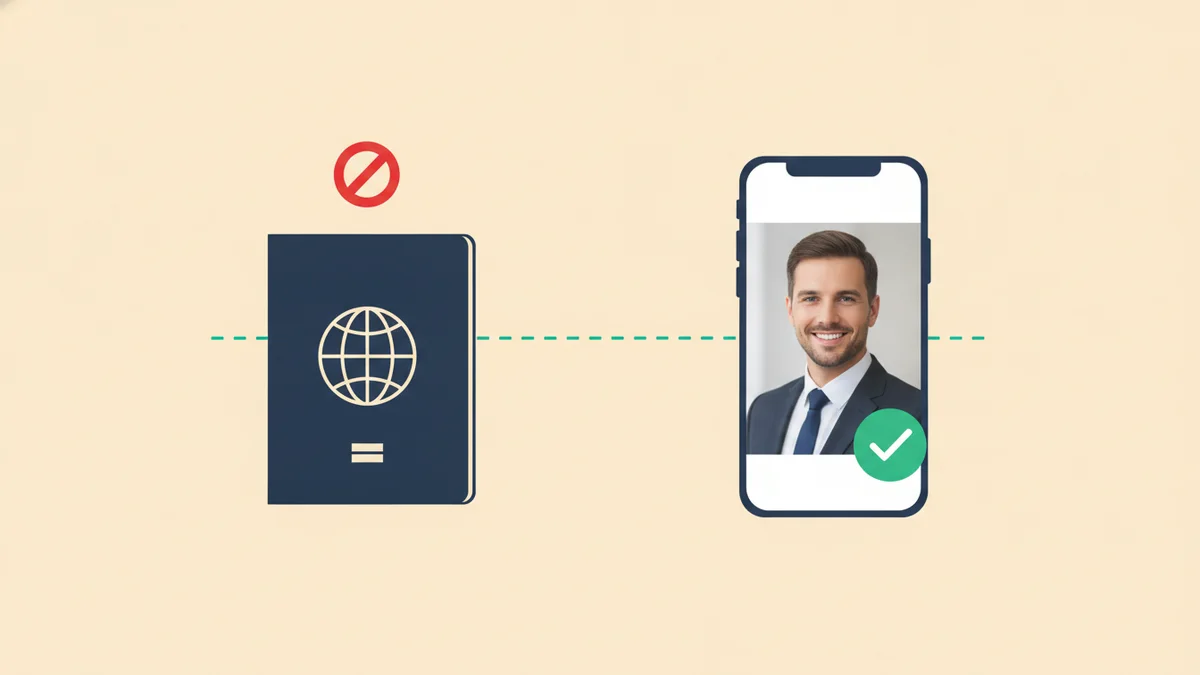
Here is the distinction that actually matters, because it trips people up constantly.
Altering your face is banned. Smoothing skin, reshaping a jaw, whitening teeth, changing eye color, AI "enhancement," upscaling that changes how you look. All of it fails, everywhere.
Formatting a real photo is usually fine. Cropping and resizing a genuine photo to the right dimensions is allowed. Background replacement is the gray zone: the US tolerates it only if it does not change the outline of your head, face, or neck, while the UK, Canada, India, and the EU lean toward rejecting it, so the safe play is to shoot against a plain background in the first place.
If you need a compliant ID photo, use a real picture and a sizing tool, not a generator. Our AI headshot for passports breakdown walks through the exact specs, and the free passport photo maker handles the crop and background without touching your face.
Do Instagram, Facebook, TikTok, and X label AI photos?
They might, and that is the point. Meta auto detects AI in images using the C2PA and IPTC metadata standards and adds an "AI info" label when it sees the signals. It requires people to label photorealistic AI video and audio, and it labels images automatically when detection fires. So your AI headshot is allowed, it just might arrive wearing a small tag that says a model helped.
This system is not perfect, and photographers have complained about real photos getting tagged "Made with AI" after a light edit. TikTok and X have both announced support for the same Content Credentials standard, so expect labeling to spread, not shrink. None of this blocks you. It just means transparency is becoming the default, whether you opt in or not.
What about acting, real estate, and other regulated fields?
A few professions play by stricter, often unwritten, rules.
Acting and casting. Platforms like Actors Access, Spotlight, and Backstage do not have an explicit AI ban, but they all demand that your headshot match what you look like right now. Casting directors are paying to know who walks through the door, so the industry strongly discourages AI headshots for real submissions. Use a real photographer here.
Real estate. The National Association of Realtors Code of Ethics, Article 12, requires agents to "present a true picture in their advertising, marketing, and other representations." There is no AI specific clause, but a heavily altered headshot that does not resemble the agent at the open house is exactly what that rule exists to prevent. Zillow and MLS rules echo the same accuracy demand.
Healthcare. Many health systems discourage or outright prohibit AI generated photos on patient facing provider profiles, because trust between a patient and a clinician is the whole game and a fake looking doctor undermines it.
Is it actually illegal? What the law says in 2026
For an honest professional headshot, no, it is not illegal anywhere we looked. The laws that exist target deception and specific harms, not "you used AI to look nice."
The EU AI Act, Article 50. This is the big one to put on your calendar. Starting August 2, 2026, providers of generative image tools must mark their outputs as machine readable AI, and anyone deploying a deepfake of a real person must clearly disclose that it is artificial. Generative systems already on the market get a bit longer, until December 2, 2026, to meet the machine readable marking duty. If you are in the EU and your headshot depicts a real person in a way that could pass as a genuine photo, plan to disclose it.
United States. There is no federal "label every AI image" law. The TAKE IT DOWN Act, signed in 2025 with platform compliance due by May 2026, targets non consensual intimate deepfakes. Dozens of states regulate election and explicit deepfakes. None of that touches your LinkedIn headshot. The common thread is deception and harm, not professional polish.
Content Credentials (C2PA). This is a voluntary provenance standard, not a law, but it is becoming the quiet backbone of the whole system. Adobe, Microsoft, LinkedIn, Meta, Google, OpenAI, the BBC, Sony, Canon, Nikon, and Leica have all signed on. The EU's marking rules line up neatly with what C2PA already does, so expect "this image carries a credential" to become normal.
The disclosure playbook: when to just say it is AI
You do not need a lawyer for this. Five simple rules cover almost every case.
- Fine, no disclosure needed. A likeness accurate AI headshot on LinkedIn, your personal site, or social, where it clearly represents the real you.
- Disclose, because trust. Job applications and high trust professional settings. Around 9 in 10 recruiters expect it, and one honest line erases the penalty.
- Disclose, because law. Inside the EU from August 2, 2026 for AI images of real people, and in political or advocacy use in several US states.
- Do not use AI at all. Passports, visas, government IDs, and serious acting submissions.
- Ask first. Your employer's brand policy before you put an AI headshot on a company site or ID badge.
The bottom line
Use an AI headshot anywhere you would use a flattering real photo of yourself, and you are almost always fine. Keep it honest, keep it looking like you, and the worst you will face is a small "AI info" label. Try to use it as a disguise, or on a passport, and the system will catch you. The technology that makes these photos is finally good enough to be invisible, which is exactly why the rules now care about honesty instead of pixels.
Want to test it? You can generate a free, honest, looks like you headshot in about a minute in the studio, no signup, and decide where it belongs.
If you want the technical layer under all these policies, the watermarks and metadata that actually travel with the file, see can AI headshots be detected.
FAQ
Are AI headshots allowed on LinkedIn?
Yes. LinkedIn allows AI created or AI enhanced profile photos as long as the image reflects your real likeness. You are not required to disclose that a photo is AI generated. The only existing rule is that your profile picture has to actually look like you, which was always true.
Can you use AI photos on Tinder, Hinge, or Bumble?
Yes, if they honestly represent you. None of the three bans AI photos outright, but all of them ban deception. Bumble is the most explicit, telling users not to use artificially generated photos to deceive. Tinder's Face Check and Hinge's selfie verification will flag faces that do not match the real you.
Can I use an AI headshot for a passport?
No. The US State Department and the passport offices of the UK, Canada, Australia, India, and the EU all prohibit AI altered photos. They require an unedited photograph of your real face. AI tools may only crop or resize a genuine photo, never change your appearance.
Do I have to disclose that my headshot is AI generated?
It depends on where. On LinkedIn and social platforms, no, although Meta may auto label it. For job applications, disclosure is not legally required but most recruiters expect it. Inside the EU, from August 2, 2026, AI images depicting real people must be disclosed under the AI Act.
Is it illegal to use an AI headshot?
No, not for normal professional use. No US or EU law bans an honest AI headshot. The laws that exist target deception, deepfakes, election manipulation, and non consensual imagery, none of which describe a polished photo of your own face on LinkedIn.
Will LinkedIn reduce my reach if my profile photo is AI?
No. The popular claim that LinkedIn cuts AI image reach by 40 to 60 percent is not a documented policy, and a profile photo has no feed reach to reduce. LinkedIn does deprioritize low effort AI generated posts in the feed, but that is about written content, not your headshot.
Can a recruiter reject me for using an AI headshot?
They can, if it looks obviously fake or unlike you. Surveys show recruiters often prefer AI headshots until they realize they are AI, then trust drops. A natural, recognizable headshot plus a willingness to mention you used AI avoids the problem.
Are AI headshots allowed on a resume?
Legally yes, there is no law against it. In the US and UK, though, most resumes should not include a photo at all for bias reasons. If you do use one, an authentic AI headshot is acceptable, but LinkedIn is the better home for it.
Will Instagram or Facebook label my AI headshot?
Possibly. Meta automatically detects AI images through C2PA and IPTC metadata and adds an "AI info" label when it finds the signals. The photo is still allowed. You simply may see a small tag indicating AI was involved.
What is the difference between an AI altered and an AI formatted photo?
An AI altered photo changes your actual appearance, such as smoothing skin, reshaping features, or swapping faces, and is rejected by ID authorities. An AI formatted photo only crops, resizes, or adjusts a genuine photo to meet specifications without changing how you look, and is generally accepted.
Sources and further reading
We checked these against primary sources. For the official wording, go straight to them.
- LinkedIn, best practices for AI assisted content
- US Department of State, passport photo requirements
- Bumble, community guidelines
- EU AI Act, Article 50 transparency obligations
- Meta, labeling AI generated images
- C2PA, Content Credentials standard
On our site: LinkedIn photo guide, AI headshots for passports, can recruiters tell, photo on a US resume, and are AI headshots professional enough.
Sources
Need help? Email [email protected]
Try the generator