
Quick answer
For most professional headshots, turn your body about 30 degrees from the camera, bring your face back to the lens, keep your chin level or a touch lower, and relax your shoulders. That three quarter pose flatters almost everyone. Square on reads direct and modern, a slight head tilt reads warm, and a raised chin reads as looking down on the viewer, so avoid it. Research on 1,517 people found a slightly lowered head raises perceived dominance.
1,517
people across five studies on how head tilt changes the way a face is judged
30°
body turn in the three quarter pose that suits almost everyone
9 poses
shown below on one woman in the same outfit and light
Headshot Poses for Women: 9 Poses on the Same Face, and What Each One Says
Poses are the part of a headshot that nobody tells you about until the photographer says "chin down, no, not that much". Below, the same woman holds nine poses in the same cream blazer, the same light and the same backdrop. The only thing that changes is how she holds her body and head.
The quick answer: which pose for which purpose
| Pose | What it signals | Use it for |
|---|---|---|
| Three quarter turn | Natural, flattering, balanced | LinkedIn, CVs, team pages: the default |
| Square on | Direct, modern, honest | Tech, startups, speaker bios |
| Over the shoulder | Poise, presence | Authors, creatives, actors, personal brands |
| Arms crossed | Confidence, ownership | Founders, directors, consultants |
| Seated lean | Engaged, approachable | Coaches, therapists, sales, recruiters |
| Hand at lapel | Composed, a little formal | Executive and board bios |
| Chin slightly down | Authority, seriousness | Law, finance, leadership |
| Gentle head tilt | Warmth, friendliness | Healthcare administration, education, customer facing roles |
| Chin up | Distance, arrogance | Avoid |
The standing poses



1. Square on. Shoulders level and facing the lens. It is honest and direct, and it is the pose most AI headshots default to. The downside: shoulders square to the camera look as wide as they can, which is why photographers rarely use it for women unless the brief is "modern and direct".
2. Three quarter turn. Turn the body about 30 degrees, then bring the face back to the lens. The near shoulder comes forward, the far shoulder drops back, and the frame gains depth. If you only learn one pose, learn this one.
3. Over the shoulder. Turn the body further away, around 60 to 70 degrees, and look back. It reads as poise and presence. Keep the neck long; if you feel a strain, the angle is too wide and it will show as creases in the photo.
The poses with hands



4. Arms crossed. Loose, not tight: hands rest on the forearms rather than gripping the elbows. It signals ownership and it works best waist up, which makes it a website and speaker bio pose more than a LinkedIn one, since the circle crop cuts the arms away anyway.
5. Seated lean. Sit on the front of a stool, lean the torso slightly toward the camera and rest the forearms on the knees. Leaning in is what people do when they are listening, and the camera reads it the same way.
6. Hand at the lapel. One hand lightly at the jacket edge. It adds formality and fills the frame at waist up. Keep the fingers relaxed and together; a clawed hand is the first thing people notice.
A note on hands in AI headshots: our studio keeps hands out of frame in every photographic style, because generated hands still fail often. That is why our Confident Stance style carries the authority of crossed arms through square shoulders and a level chin, and Lean In shows the forward lean from the chest up.
The head angle poses



7. Chin slightly down. Lower the chin by about the width of a finger and keep the eyes on the lens. This is the photographer's "push your forehead toward the camera", and it does two things: it defines the jaw, and it changes how people read you. In five studies with 1,517 participants, Witkower and Tracy found that a downward head tilt with forward gaze raised perceived dominance, because it creates the illusion of lowered, V shaped brows without any change in the face itself (Psychological Science, 2019).
8. Chin up. The opposite. Raising the chin shows the underside of the jaw and nostrils and makes the viewer feel looked down on. Photographers avoid it for the same reason the research above suggests: the head angle changes how the face is read before anyone notices the angle itself.
9. Gentle head tilt. A small tilt to one side with a real smile. It reads warm and open, which suits roles where people need to feel comfortable approaching you. Keep it small; a large tilt reads as playful rather than professional.
Glasses: the pose detail most guides skip
If you wear glasses, the pose decides whether people see your eyes or a reflection.


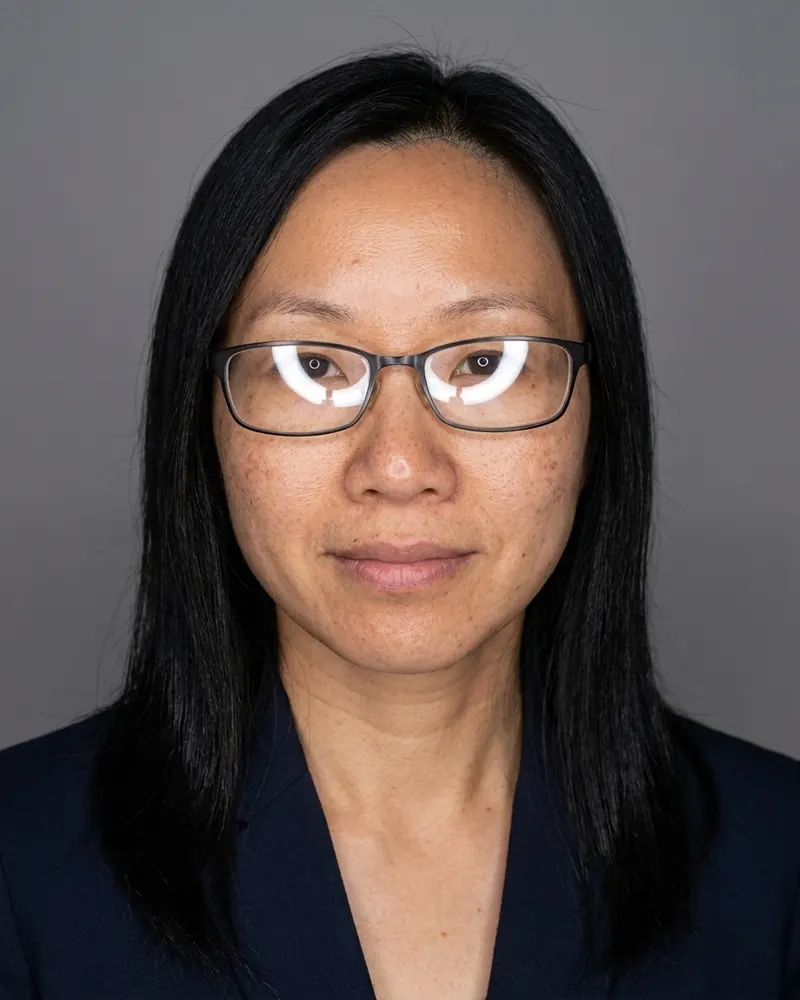
Two fixes, both free: lower the chin very slightly so the lenses tilt down and away from the light, and put the light to one side rather than straight in front. A ring light directly behind the camera is the worst possible setup for glasses, as the third photo shows.
How to practise the pose before your shoot
- Use the back camera, not the selfie camera, and stand about two meters away with the zoom at 2x or 3x. Arm's length distorts the face; a longer distance does not. Our article on why you look better in the mirror explains the lens distance effect.
- Find your three quarter side. Take the three quarter pose turned left, then right. Most people have a side they prefer; pick it once and use it everywhere.
- Practise the chin. Take three photos: level, a finger lower, a finger higher. Compare at thumbnail size. The lower one almost always wins.
- Breathe out before the shutter. Shoulders drop on the exhale. Tension in the shoulders is the most common reason a pose looks stiff.
- Think of a person, not a camera. The 100 millisecond judgment people make from a face (Willis and Todorov, 2006) is mostly about expression. A real smile comes from thinking of someone you like.
Poses by job
| Job | First choice | Second choice |
|---|---|---|
| Lawyer, banker, accountant | Three quarter, chin slightly down | Hand at lapel |
| Founder, director | Arms crossed (website), square on (LinkedIn) | Three quarter |
| Coach, therapist, recruiter | Seated lean | Gentle head tilt |
| Teacher, nurse manager, HR | Gentle head tilt | Three quarter |
| Author, artist, actor | Over the shoulder | Square on |
| Engineer, product manager | Square on | Three quarter |
The bottom line
Turn the body, bring the face back, lower the chin a touch, relax the shoulders and think of someone you like. That covers most professional headshots. Use over the shoulder or a seated lean when you want more personality, never raise the chin, and if you wear glasses, move the light to the side.
FAQ
What is the most flattering headshot pose for women? The three quarter turn: body about 30 degrees from the camera, face back to the lens, chin level or slightly lowered, shoulders relaxed. It adds depth, narrows the shoulders slightly and suits almost every face and job.
Should I tilt my head in a headshot? A small side tilt reads warm and friendly and suits customer facing roles. A small downward tilt with your eyes on the lens reads confident; research with 1,517 participants found it raises perceived dominance. Avoid tilting your chin up.
Where should I put my hands in a headshot? Usually out of frame. For waist up portraits, arms loosely crossed, forearms resting on the knees when seated, or one hand at the lapel all work. Keep fingers relaxed and together.
Is arms crossed too aggressive for a woman's headshot? No, if the arms are loose and the expression is warm. Tight arms and a serious face can read closed; loose arms and a soft smile read confident. It suits founders, directors and consultants.
How do I avoid glare on my glasses in a headshot? Lower your chin very slightly so the lenses tilt away from the light, and put the light to one side instead of directly in front of you. Never use a ring light straight on with glasses.
Should I look directly at the camera? For a professional headshot, yes. Eye contact through the lens is what makes the viewer feel addressed. Looking away suits editorial or creative portraits, not LinkedIn or a CV.
What poses do AI headshot generators use? Most default to square on with no pose at all. Our studio has styles that set the pose for you, including Over the Shoulder, Lean In and Confident Stance, while keeping hands out of frame.
Get the pose right without a photographer
Our Over the Shoulder, Lean In and Confident Stance styles set the pose for you. Upload one selfie and compare all three.
Try Over the Shoulder freeCite this page
In five studies with 1,517 participants, tilting the head slightly down while keeping the eyes on the viewer increased perceived dominance; for a professional headshot that means a level or slightly lowered chin reads as authority, and a raised chin reads as looking down on the viewer.
FreeHeadshot.org, “Headshot Poses for Women: 9 Poses Shown on One Face”, updated October 29, 2026. https://freeheadshot.org/blog/headshot-poses-for-women
Sources
Need help? Email [email protected]
Try the generator